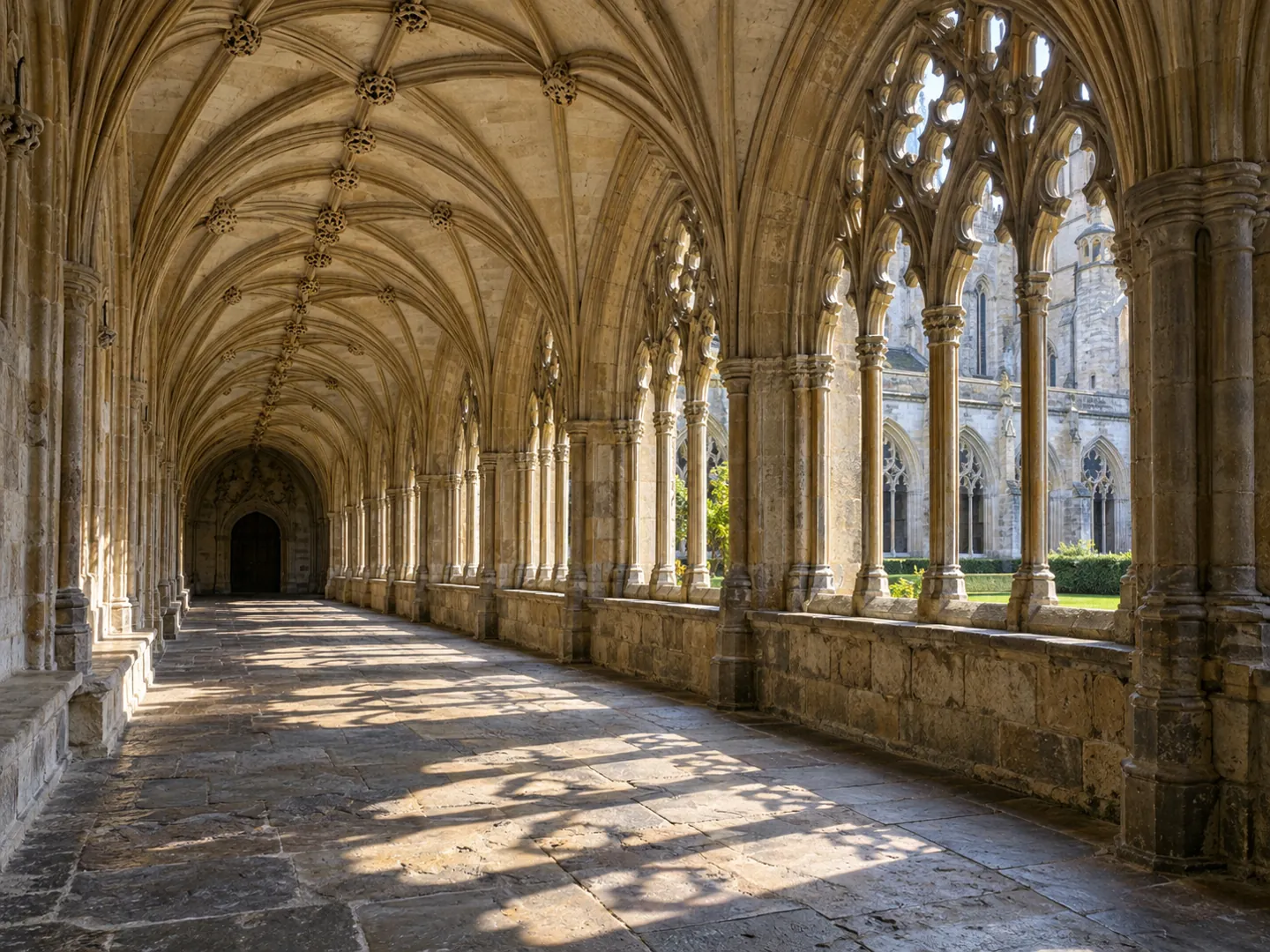
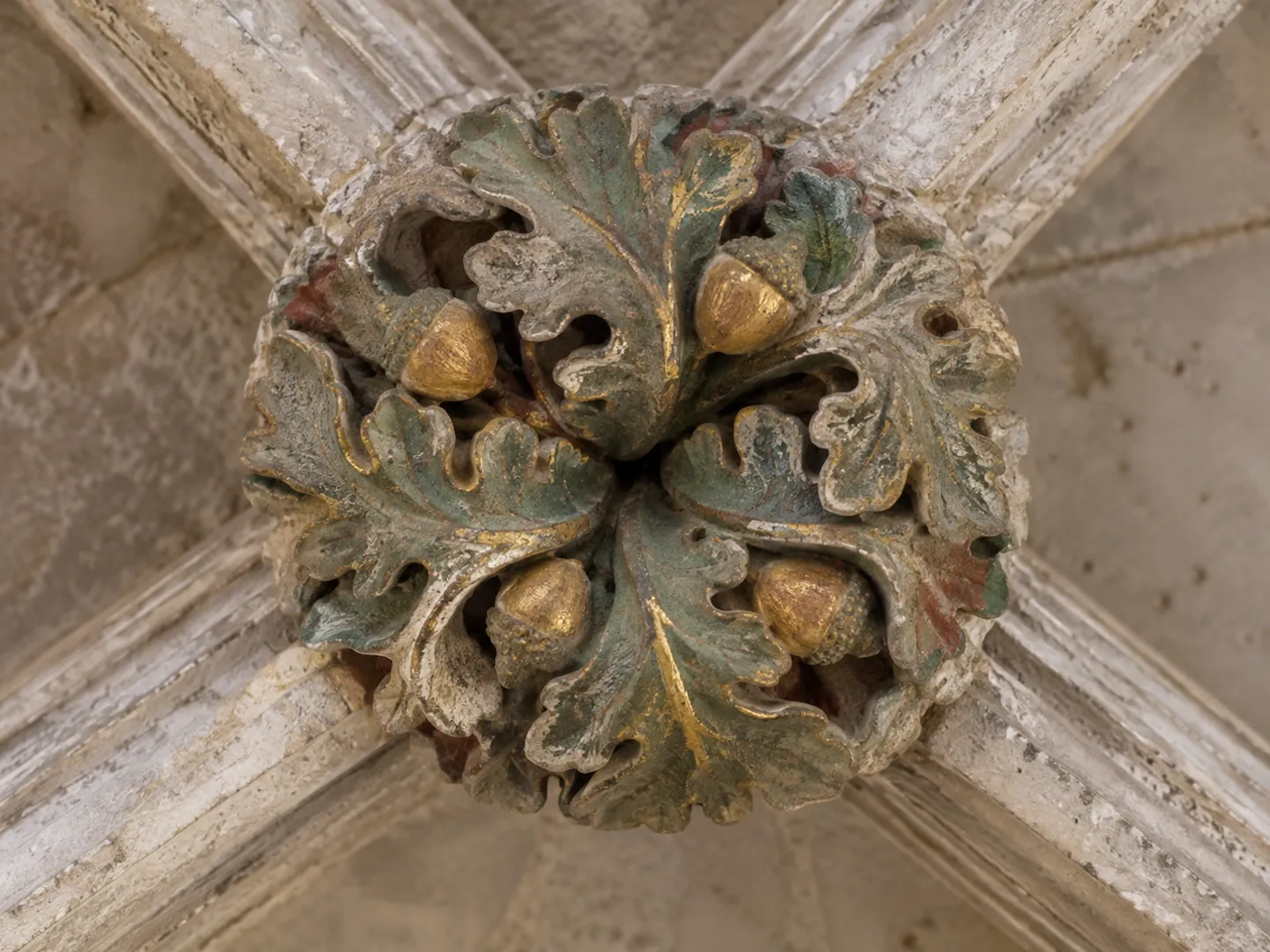
The best carving in a medieval building is often the furthest away.
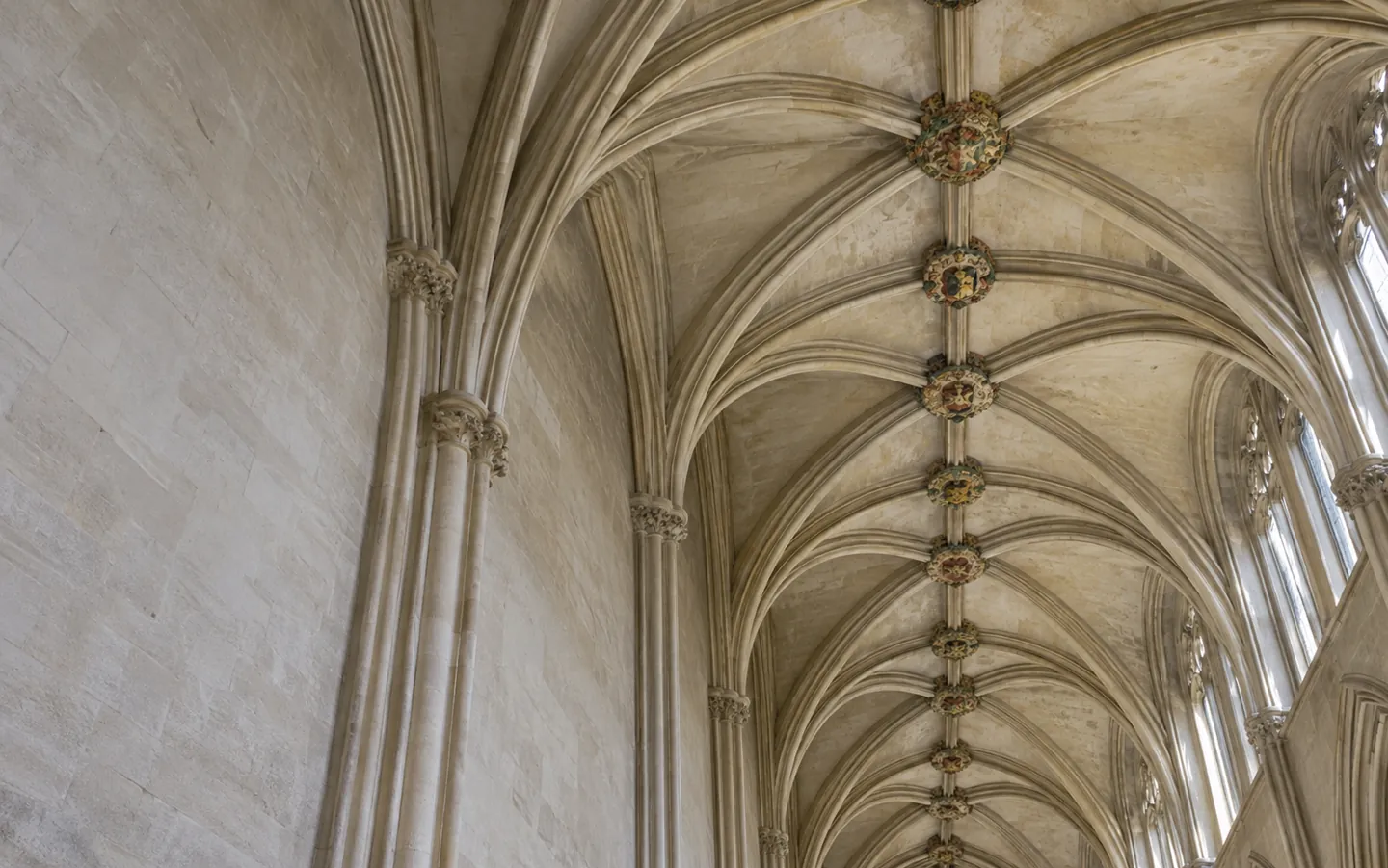
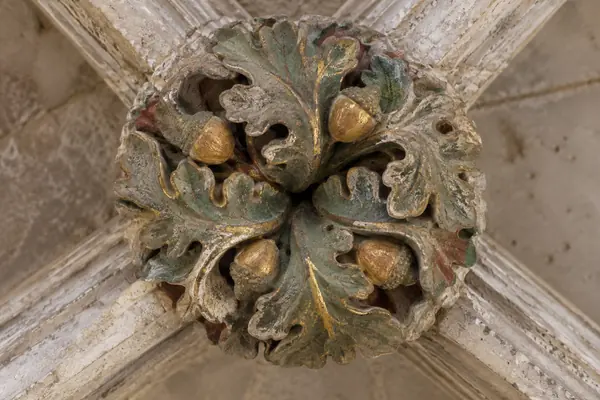
In a stone vault, the ribs cross at a projecting stone called a boss. Masons often carved and painted them with leaves, faces, beasts and stories, high above everyone's heads.
AI-generated image, not a photograph of a real person or place.
Find the ribs
Follow them to the crossing
Read the carving
Stone stories, overhead
THE SHORT ANSWER
A boss is where the ribs cross.
Part structure, part decoration. Easy to miss unless you know to look up.
WHAT IT IS
The knot in the vault
A University of Pittsburgh glossary of medieval architecture defines a boss as a projecting stone at the intersection of the ribs of a vault, often the keystone and frequently carved.
Pick a moment in the story of Norwich Cathedral's bosses. The bar shows roughly how far back it sits, from the Norman foundation to a modern way of getting close.
Dates from Current Archaeology's feature on the Norwich cloister bosses and from Norwich Cathedral's own pages.
TWO NUMBERS WORTH KNOWING
A thousand carvings, a long way up.
One figure on the size of the collection, one on how keen people were to see it closer.
≈ 1,000
Sculpted and painted stone bosses at Norwich
Current Archaeology describes the thousand or so bosses on the vaults of the cloister, nave, presbytery and transepts as the largest surviving collection of such Gothic art from medieval Europe.
THE COLLECTION · CURRENT ARCHAEOLOGY
≈ 10,000
Helter skelter riders in 11 days, 2019
Norwich Cathedral says about 10,000 people rode the helter skelter installed in the nave in August 2019, which was designed to bring visitors closer to the bosses.
GETTING CLOSER · NORWICH CATHEDRAL
Current Archaeology notes that the bosses survived the Reformation, the Civil War era and Second World War incendiary bombing, and that rising damp in the cloister has been a more recent concern.
FOUR WAYS TO SEE MORE
Bosses reward a slow look.
They are high, small and often in shadow. A few habits make them much easier to enjoy in any vaulted church, cloister or chapter house.
Find the ribs first
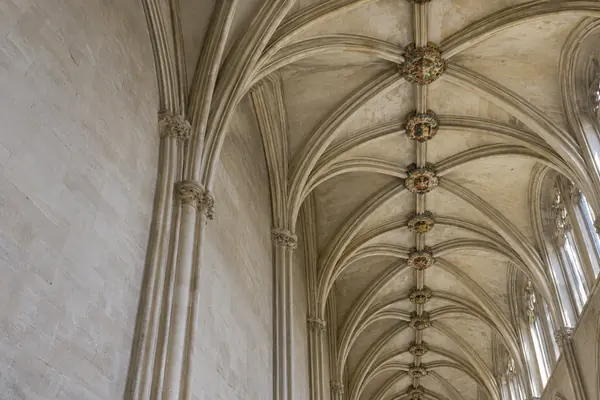
Trace the stone ribs across the ceiling. Wherever they cross or meet, look for a boss.
Bring binoculars
A small pair, or a phone's zoom, turns a dot of colour into a face, a leaf or a whole scene.
Follow the sequence
At Norwich the nave bosses tell stories from Creation to the Last Judgement, so it pays to read them bay by bay.
Look for the odd ones
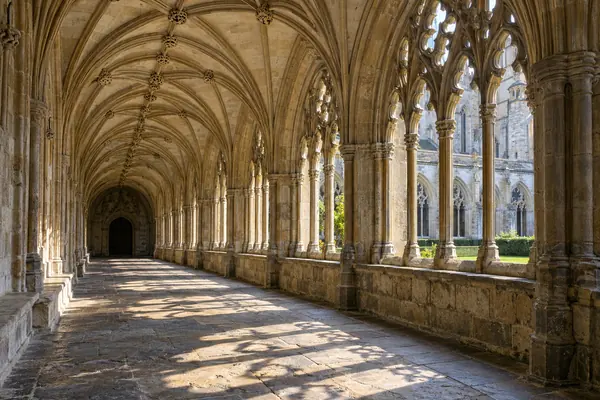
Alongside the stories are green men, leaf spirals and strange hybrid creatures, often in the cloister.
AI-generated image, not a photograph of a real person or place.AI-generated image, not a photograph of a real person or place.
WHY RIBS NEED A BOSS
Where the skeleton comes together.
Britannica explains that medieval builders developed the rib vault, a skeleton of arches or ribs on which the masonry could be laid, using pointed arches that could rise as high over a short span as over a long one.
Where several ribs meet, a single stone has to receive them all. That junction stone, the boss, became an invitation to carve. At Norwich, one researcher found the cloister's east walk bosses were arranged in two sequences that diverge from outside the chapter house.
Questions
Questions people ask
What is a roof boss?
A projecting stone where the ribs of a vault cross. A University of Pittsburgh medieval architecture glossary notes it is often the keystone and frequently carved.
Where is the biggest collection?
Norwich Cathedral describes its medieval roof bosses as the biggest collection of their kind in the world, in the nave and the cloister.
How many bosses does Norwich have?
Current Archaeology puts it at a thousand or so sculpted and painted stone bosses, across the cloister, nave, presbytery and transepts.
What do the carvings show?
At Norwich the nave bosses tell Bible stories from Creation to the Last Judgement. The cloister has foliage, Green Men and other figures, including a hybrid that one researcher reads as a symbol of gluttony.
Was there really a helter skelter in Norwich Cathedral?
Yes. For 11 days in August 2019 a helter skelter stood in the nave as part of the Seeing It Differently project, and about 10,000 people rode it.